Marketing Automation for Small Business: Save 15+ Hours Per Week on Marketing Tasks
Small business owners spend countless hours on repetitive marketing tasks that could be automated. Learn how the right marketing automation strategy can reclaim 15+ hours of your week while improving results and growing your customer base more effectively.
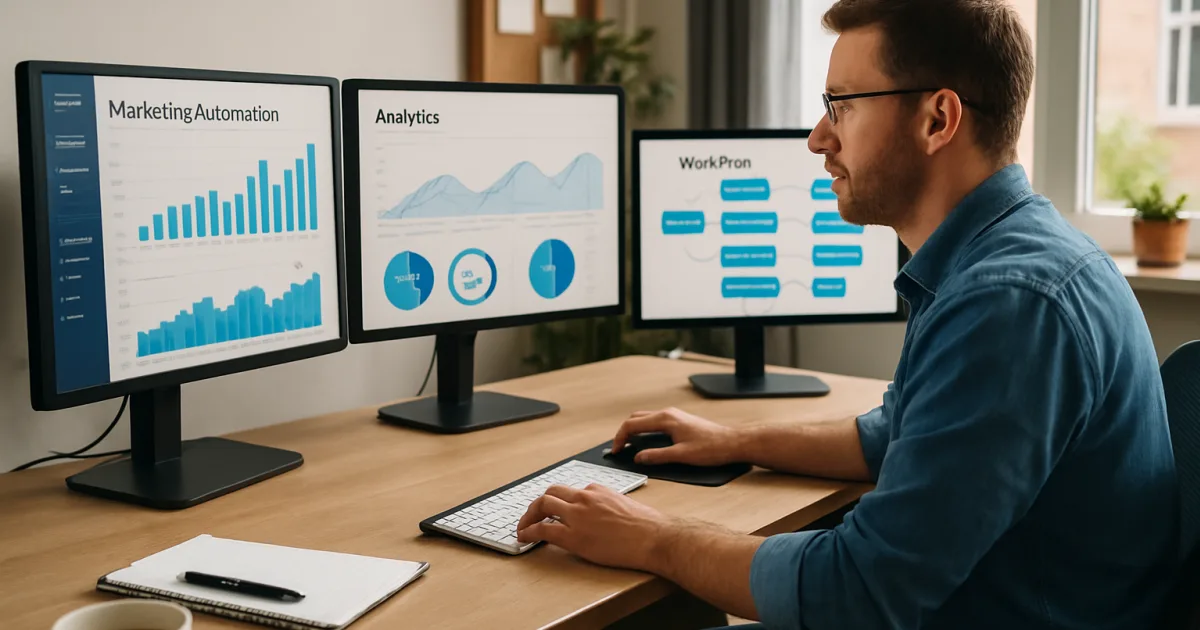
Artificial intelligence is revolutionizing how small businesses operate, offering unprecedented opportunities to automate processes, enhance decision-making, and compete with larger enterprises. With the right AI tools and strategies, small business owners can streamline operations, reduce costs, and focus on what matters most: growing their business.
Understanding AI for Small Business Operations
Artificial intelligence encompasses a broad range of technologies designed to perform tasks that typically require human intelligence. For small businesses, AI isn't about replacing human workers but rather augmenting their capabilities and automating repetitive tasks. Common AI applications include chatbots for customer service, predictive analytics for inventory management, and automated scheduling systems. These technologies can help small businesses operate more efficiently while maintaining the personal touch that customers value.
The key to successful AI implementation lies in identifying specific pain points within your business operations. Whether it's managing customer inquiries, processing invoices, or analyzing sales data, AI can provide targeted solutions that deliver immediate value. Our automation solutions are specifically designed to address the unique challenges faced by small and medium-sized businesses.
Top AI Tools That Transform Small Business Productivity
Several AI-powered tools have emerged as game-changers for small business productivity. Customer relationship management (CRM) systems now incorporate AI to predict customer behavior, automate follow-ups, and personalize marketing campaigns. Accounting software uses machine learning to categorize expenses, detect anomalies, and generate financial insights. Virtual assistants can schedule appointments, respond to emails, and manage social media posts without human intervention.
Communication tools powered by AI can transcribe meetings, summarize key points, and even translate conversations in real-time. According to McKinsey research, businesses that adopt AI technologies see an average productivity increase of 20-25%. Project management platforms now use AI to predict project timelines, allocate resources efficiently, and identify potential bottlenecks before they impact delivery dates.
The beauty of modern AI tools lies in their accessibility and ease of integration. Many solutions offer plug-and-play functionality that doesn't require technical expertise or significant upfront investment. Our AI implementation process ensures seamless integration with your existing systems and workflows.
Cost-Effective AI Implementation Strategies
Implementing AI doesn't have to break the bank, especially for small businesses operating on tight budgets. The most effective approach is to start small with one or two specific use cases that can deliver immediate value. Focus on areas where manual processes consume significant time or where human error frequently occurs. Cloud-based AI services offer subscription models that eliminate large upfront costs and provide scalability as your business grows.
Many successful small businesses begin their AI journey with customer service automation or basic data analysis tools. These implementations typically show quick returns on investment through reduced labor costs and improved customer satisfaction. Gartner reports that small businesses implementing AI strategically see cost reductions of 15-30% in their first year. The key is to measure results continuously and expand AI usage based on proven success in initial applications.
Consider partnering with AI service providers who offer flexible pricing models and ongoing support. This approach allows you to access enterprise-level AI capabilities without the need for in-house technical expertise. Our pricing structure is designed specifically for small businesses, offering scalable solutions that grow with your needs.
Real-World Success Stories and ROI Examples
Small businesses across various industries are already reaping the benefits of AI implementation. A local retail chain implemented AI-powered inventory management and reduced stockouts by 40% while decreasing excess inventory by 25%. A small marketing agency used AI writing tools and automated reporting systems to increase client capacity by 60% without hiring additional staff. These real-world examples demonstrate that AI's impact extends far beyond theoretical benefits.
A family-owned restaurant chain implemented AI-driven scheduling and demand forecasting, resulting in 20% reduction in labor costs and 15% increase in customer satisfaction scores. An e-commerce business used AI chatbots and recommendation engines to boost online sales by 35% while reducing customer service workload by half. According to Forrester research, businesses implementing AI solutions typically see ROI within 6-12 months of deployment.
The common thread among these success stories is strategic implementation focused on specific business objectives. These businesses didn't try to revolutionize everything at once but instead identified key areas where AI could make the biggest impact. Our detailed case studies showcase how similar businesses have transformed their operations using targeted AI solutions.
Overcoming Common Implementation Challenges
While AI offers tremendous potential, small businesses often face unique challenges during implementation. Limited technical expertise, concerns about data security, and resistance to change from employees are common obstacles. The key to overcoming these challenges lies in proper planning, employee training, and choosing the right technology partners. Start with user-friendly solutions that require minimal technical knowledge and provide comprehensive training resources.
Data quality is another critical factor that can make or break AI implementation. Many small businesses have inconsistent or incomplete data, which can limit AI effectiveness. Begin by establishing proper data collection and management practices before deploying AI tools. Employee buy-in is essential for successful AI adoption, so involve your team in the selection process and clearly communicate how AI will enhance rather than replace their roles.
Security concerns are valid but shouldn't prevent you from leveraging AI benefits. Choose reputable providers with strong security credentials and ensure all AI tools comply with relevant data protection regulations. Our approach to AI implementation addresses these common challenges through proven methodologies and ongoing support.
Future-Proofing Your Business with AI
The AI landscape continues to evolve rapidly, with new capabilities emerging regularly. To future-proof your business, focus on building a foundation that can adapt to new technologies rather than committing to specific tools or platforms. Develop data management practices that will support future AI applications and foster a culture of continuous learning and adaptation within your organization. This approach ensures your business remains competitive as AI technology advances.
Consider AI adoption as an ongoing journey rather than a one-time project. Start with basic automation and gradually incorporate more sophisticated AI capabilities as your team becomes comfortable with the technology. Monitor industry trends and emerging AI applications relevant to your sector to identify new opportunities for efficiency gains and competitive advantages.
Building partnerships with AI service providers who prioritize innovation and customer success will help you stay ahead of the curve. Our latest insights keep you informed about emerging AI trends and their potential applications for small businesses.
Frequently Asked Questions
How much does AI implementation cost for small businesses?
AI implementation costs vary widely depending on the specific tools and scope of deployment. Many cloud-based AI solutions start at $50-200 per month, making them accessible for small businesses. The key is to start with targeted applications that deliver quick ROI and expand gradually based on proven results.
Do I need technical expertise to implement AI in my business?
Most modern AI tools are designed for non-technical users with intuitive interfaces and comprehensive support resources. While technical expertise can be helpful, it's not essential for basic AI implementation. Many successful small businesses start with user-friendly solutions and gradually build internal capabilities over time.
Will AI replace my employees?
AI is designed to augment human capabilities rather than replace workers, especially in small businesses where personal relationships matter. Most AI applications automate repetitive tasks, allowing employees to focus on higher-value activities like customer relationship building and strategic planning. The goal is to enhance productivity and job satisfaction, not eliminate positions.
How long does it take to see results from AI implementation?
Many businesses see initial results within 2-4 weeks of implementing basic AI tools like chatbots or automated scheduling systems. More complex implementations may take 2-6 months to show significant impact. The key is setting realistic expectations and measuring progress through specific metrics aligned with your business objectives.
What types of data do I need for AI to work effectively?
The data requirements depend on your specific AI application, but most tools work with common business data like customer information, sales records, or website interactions. Clean, organized data produces better results, but you don't need massive datasets to get started. Many AI tools can provide value with relatively small amounts of quality data.
Is my business data secure with AI tools?
Reputable AI service providers implement robust security measures including encryption, secure data centers, and compliance certifications. Always review security policies and choose providers with strong track records and transparent data handling practices. Our security protocols meet industry standards and prioritize data protection for all clients.
Which AI application should I implement first?
Start with areas where you spend the most time on repetitive tasks or where human error frequently occurs. Customer service chatbots, automated scheduling, and basic data analysis are popular first implementations because they deliver quick wins and require minimal setup. Focus on one area initially to ensure successful adoption before expanding to other applications.
Getting Started
The journey to AI-powered business transformation begins with a single step. Whether you're looking to automate customer service, streamline operations, or gain better insights from your data, the right AI solution can deliver immediate value and long-term competitive advantages. Don't let the fear of complexity or cost prevent you from exploring AI's potential for your business. Schedule a consultation today to discover how AI can transform your operations and accelerate your growth trajectory.
Brandon Hufstetler
Principal and CEO of Autonomous Retail Technology
Brandon Hufstetler is an AI strategist and executive dedicated to helping businesses connect technology, data, and strategy to achieve real growth in the modern business era. As the Principal and CEO of Autonomous Retail Technology, he leads initiatives that use AI to streamline operations, enhance decision-making, and scale business impact. With nearly 25 years of experience spanning startups, scaling ventures, and large enterprises, Brandon has built a reputation for bridging the gap between innovation and execution. His approach blends business acumen with deep technical insight, enabling organizations to embrace AI in ways that are both responsible and transformative. Before founding Autonomous Retail Technology, Brandon spent more than a decade in senior leadership roles overseeing digital transformation, business development, and enterprise analytics. He is passionate about empowering leaders to navigate the evolving AI landscape with confidence, creativity, and measurable outcomes.
Ready to Automate Your Business?
Let's discuss how automation can transform your operations.
Book a Free Consultation