5 AI Training Solutions That Cut Development Time by 80%
Stop wasting months on AI model training. Modern AI training solutions can reduce your development timeline from weeks to days through automation, pre-trained models, and intelligent optimization. Learn which platforms deliver the fastest results for enterprise teams.
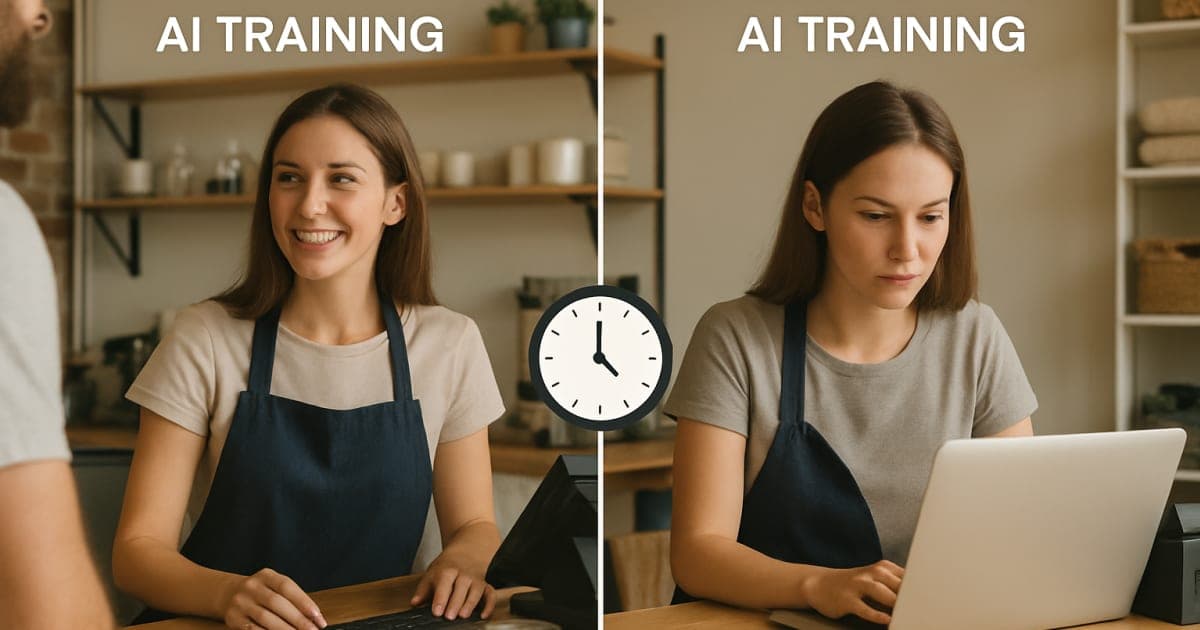
Small businesses today face unprecedented competition and rising operational costs, making automation no longer a luxury but a necessity for survival. Smart automation solutions can transform your daily operations, reduce manual errors, and free up valuable time to focus on growth and customer relationships.
Understanding Business Automation Fundamentals
Business automation involves using technology to perform routine tasks without human intervention, streamlining operations from customer service to inventory management. Modern automation tools have become incredibly accessible and affordable, allowing small businesses to compete with larger corporations on efficiency and service quality. The key is identifying which processes consume the most time and resources while adding the least strategic value to your business. By automating these repetitive tasks, you create space for innovation, relationship building, and strategic planning that drives real growth.
According to McKinsey research, businesses that embrace automation see productivity increases of up to 40% within the first year of implementation. This dramatic improvement stems from eliminating bottlenecks, reducing human error, and ensuring consistent service delivery across all customer touchpoints. Small businesses particularly benefit because automation allows a lean team to accomplish what previously required multiple full-time employees, dramatically improving profit margins and operational efficiency.
Key Areas Where Small Businesses Can Automate
Customer relationship management represents one of the most impactful areas for automation, encompassing lead capture, follow-up sequences, and customer support workflows. Modern CRM systems can automatically route inquiries, schedule appointments, send personalized communications, and track customer interactions throughout the entire sales cycle. Financial processes like invoicing, payment processing, and expense tracking can be completely automated, eliminating late payments and reducing accounting overhead significantly. Marketing automation platforms handle email campaigns, social media posting, lead scoring, and customer segmentation, ensuring consistent brand messaging while nurturing prospects through the sales funnel.
Inventory management and order fulfillment automation prevents stockouts, reduces carrying costs, and ensures timely deliveries without constant manual monitoring. Employee scheduling, time tracking, and payroll processing can be streamlined through integrated systems that eliminate administrative burden and ensure compliance with labor regulations. Our automation solutions cover all these critical business functions with seamless integration and minimal learning curve for your team.
Choosing the Right Automation Tools
Selecting appropriate automation tools requires careful evaluation of your current workflows, technical requirements, and budget constraints to ensure maximum return on investment. Start by mapping your most time-consuming processes and identifying where delays, errors, or inefficiencies commonly occur throughout your operations. Consider tools that integrate well with your existing systems rather than requiring complete overhauls of established processes and data structures. Scalability is crucial – choose solutions that can grow with your business rather than requiring replacement as you expand operations and serve more customers.
Cloud-based solutions typically offer the best value for small businesses, providing enterprise-level functionality without massive upfront investments or ongoing maintenance requirements. Look for platforms with strong customer support, comprehensive training resources, and proven track records with businesses similar to yours in size and industry. Harvard Business Review research shows that businesses choosing integrated automation platforms over point solutions achieve 60% better results and faster implementation timelines.
Implementation Strategy and Best Practices
Successful automation implementation requires a phased approach, starting with one or two critical processes rather than attempting to automate everything simultaneously. Begin with processes that are well-documented, frequently repeated, and have clear success metrics to measure improvement and build confidence in automation benefits. Train your team thoroughly on new systems and involve them in the selection process to ensure buy-in and smooth adoption throughout the organization. Document all automated workflows and establish monitoring procedures to ensure systems continue operating optimally as your business evolves and grows.
Understanding AI implementation fundamentals helps you make informed decisions about which processes benefit most from intelligent automation versus simple rule-based workflows. Regular reviews and optimization ensure your automation continues delivering value as business needs change and new opportunities emerge for efficiency improvements. Our success stories demonstrate how businesses achieve remarkable results by following proven implementation methodologies and best practices developed through years of practical experience.
Measuring ROI and Success Metrics
Tracking automation return on investment requires establishing baseline measurements before implementation and monitoring key performance indicators consistently over time. Time savings, error reduction, customer satisfaction improvements, and cost decreases provide quantifiable evidence of automation success and help justify further investments in technology solutions. Revenue growth, improved cash flow, and increased customer retention often result from automation but may take several months to become apparent in your financial statements. Employee satisfaction and stress levels frequently improve when repetitive tasks are automated, leading to better retention and higher productivity in remaining human-focused activities.
Gartner research indicates that businesses implementing comprehensive automation strategies see average cost reductions of 25-30% within eighteen months while simultaneously improving service quality and customer satisfaction scores. Regular performance reviews help identify opportunities for expanding automation to additional processes and ensure existing systems continue meeting business objectives effectively. Consider checking our pricing information to understand the investment required and potential returns for your specific business needs and objectives.
Common Pitfalls and How to Avoid Them
Over-automation represents one of the most common mistakes, where businesses attempt to automate processes that benefit from human judgment, creativity, or personal touch with customers. Poor planning and inadequate training often lead to implementation failures, employee resistance, and systems that create more problems than they solve for daily operations. Choosing tools based solely on features or price without considering integration requirements, user experience, and long-term support can result in expensive mistakes and operational disruptions. Failing to maintain and update automated systems leads to decreased performance, security vulnerabilities, and missed opportunities for continuous improvement and optimization.
Forrester studies show that businesses with dedicated automation champions and change management strategies achieve 80% higher success rates than those implementing automation without proper planning and support structures. Start small, measure results carefully, and expand gradually based on proven success rather than rushing to automate everything at once without proper foundation and experience.
Future-Proofing Your Automation Strategy
Staying current with automation technology trends ensures your business remains competitive and continues benefiting from technological advances and new capabilities as they emerge. Artificial intelligence and machine learning integration will increasingly enhance automation capabilities, enabling more sophisticated decision-making and predictive analytics for small businesses. Cloud computing evolution, mobile accessibility, and API integrations will continue expanding automation possibilities while reducing technical barriers and implementation costs significantly. Building relationships with technology partners who understand your industry and business model helps ensure your automation strategy evolves appropriately with changing market conditions and customer expectations.
Regular technology assessments and strategic planning sessions help identify emerging opportunities and potential threats to your current automation approach and competitive positioning. Our team stays current with industry developments and can help you navigate the evolving automation landscape through our latest insights and strategic consultation services.
Frequently Asked Questions
How much does business automation cost for small businesses?
Automation costs vary widely depending on the complexity and scope of processes you want to automate, typically ranging from $50-500 per month for basic solutions. Most small businesses start with simple automation tools and gradually expand their investment as they see returns and identify additional opportunities. The key is starting with high-impact, low-cost automation that delivers immediate time savings and efficiency improvements before investing in more comprehensive solutions.
What processes should I automate first in my small business?
Start with repetitive, time-consuming tasks that don't require human creativity or judgment, such as data entry, appointment scheduling, or basic customer communications. Email marketing, invoice generation, and social media posting are excellent starting points because they deliver immediate time savings and improved consistency. Focus on processes where mistakes are costly or common, as automation can significantly reduce errors while freeing up your time for more strategic activities.
Will automation eliminate jobs in my small business?
Automation typically transforms jobs rather than eliminating them, allowing employees to focus on higher-value activities like customer service, creative problem-solving, and business development. Most small businesses use automation to handle increased workload without hiring additional staff rather than replacing existing employees. The goal is to make your team more productive and your business more profitable while improving job satisfaction by eliminating boring, repetitive tasks.
How long does it take to implement automation solutions?
Simple automation can be implemented within days or weeks, while comprehensive systems may take several months depending on complexity and integration requirements. Most businesses see initial benefits within the first 30 days of implementation, with full optimization occurring over 3-6 months as processes are refined. The key is starting with quick wins to build confidence and momentum before tackling more complex automation projects that require extensive planning and testing.
Do I need technical expertise to manage automated systems?
Modern automation tools are designed for business users without technical backgrounds, featuring intuitive interfaces and drag-and-drop functionality for easy setup and management. Most platforms provide comprehensive training resources, templates, and customer support to help you succeed without requiring programming or IT expertise. However, having a technology partner or consultant can accelerate implementation and ensure optimal configuration for your specific business needs and objectives.
How do I know if automation is working effectively for my business?
Track key metrics like time savings, error reduction, customer satisfaction scores, and cost per transaction to measure automation effectiveness objectively. Monitor employee productivity, response times, and overall business efficiency to identify areas where automation is delivering value versus areas needing improvement. Regular reviews and performance analysis help optimize automated processes and identify opportunities for expanding automation to additional business functions and workflows.
Can automation help my small business compete with larger companies?
Automation levels the playing field by allowing small businesses to deliver enterprise-quality service and efficiency without massive staff or infrastructure investments. You can provide 24/7 customer support, instant responses, and personalized communications that match or exceed larger competitors' capabilities through smart automation solutions. Learn more about what makes us different and how we help small businesses compete effectively through strategic automation implementation and ongoing optimization support.
Getting Started
Ready to transform your business operations through smart automation? The journey begins with understanding your unique challenges and identifying the highest-impact opportunities for improvement in your daily workflows and customer interactions. Our experienced team can guide you through the entire process, from initial assessment to full implementation and ongoing optimization of your automation strategy. Don't let manual processes hold back your business growth – schedule a consultation today to discover how automation can revolutionize your operations and accelerate your success in today's competitive marketplace.
Brandon Hufstetler
Principal and CEO of Autonomous Retail Technology
Brandon Hufstetler is an AI strategist and executive dedicated to helping businesses connect technology, data, and strategy to achieve real growth in the modern business era. As the Principal and CEO of Autonomous Retail Technology, he leads initiatives that use AI to streamline operations, enhance decision-making, and scale business impact. With nearly 25 years of experience spanning startups, scaling ventures, and large enterprises, Brandon has built a reputation for bridging the gap between innovation and execution. His approach blends business acumen with deep technical insight, enabling organizations to embrace AI in ways that are both responsible and transformative. Before founding Autonomous Retail Technology, Brandon spent more than a decade in senior leadership roles overseeing digital transformation, business development, and enterprise analytics. He is passionate about empowering leaders to navigate the evolving AI landscape with confidence, creativity, and measurable outcomes.
Ready to Automate Your Business?
Let's discuss how automation can transform your operations.
Book a Free Consultation