How AI Agents Are Transforming Business Operations: Your Solution to Manual Task Overload
Drowning in repetitive manual tasks? AI agents are revolutionizing how businesses operate by automating complex workflows, reducing human error, and freeing up valuable time for strategic initiatives. Explore how autonomous technology can transform your business operations.
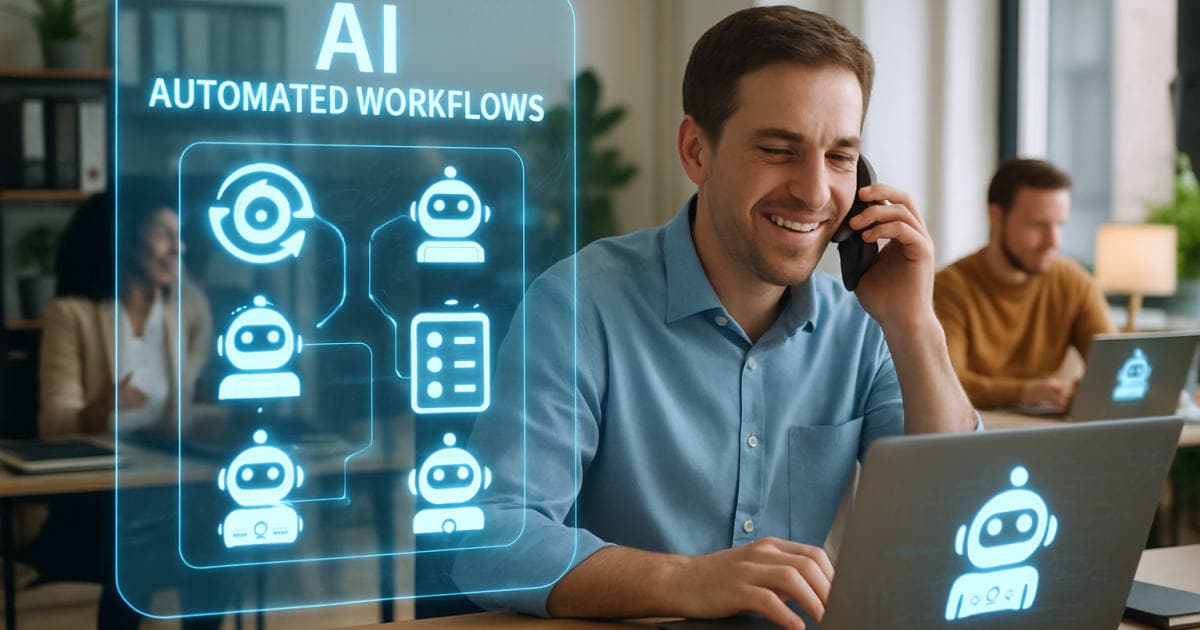
Small businesses today face unprecedented challenges in staying competitive while managing rising operational costs and increasing customer expectations. Autonomous technology offers a transformative solution that can streamline operations, reduce manual workload, and drive sustainable growth without requiring massive upfront investments.
Understanding Autonomous Technology for Small Business
Autonomous technology refers to intelligent systems that can perform tasks, make decisions, and adapt to changing conditions with minimal human intervention. For small businesses, this means automating repetitive processes like customer service responses, inventory management, appointment scheduling, and data analysis. Unlike traditional automation that follows rigid rules, autonomous systems use artificial intelligence to learn from patterns and improve performance over time. According to McKinsey research, businesses implementing AI-driven automation see productivity gains of 20-35% within the first year.
The technology encompasses everything from chatbots that handle customer inquiries to predictive analytics that forecast inventory needs and automated marketing campaigns that personalize customer experiences. Small businesses can start with simple implementations like automated email responses or social media scheduling, then gradually expand to more sophisticated applications. The key advantage lies in the technology's ability to operate independently while continuously learning and optimizing processes based on real-world data and outcomes.
Key Benefits and ROI for Small Businesses
The most immediate benefit small businesses experience is significant time savings, with owners reporting 15-25 hours per week freed up from routine tasks after implementing autonomous solutions. Cost reduction follows closely, as automated systems can handle multiple functions simultaneously without requiring additional staff or overtime payments. Customer satisfaction also improves dramatically when autonomous systems provide 24/7 availability, instant responses, and consistent service quality that doesn't fluctuate based on human factors like fatigue or mood.
Revenue growth becomes achievable through autonomous technology's ability to identify sales opportunities, optimize pricing strategies, and personalize customer interactions at scale. Our success stories demonstrate how small businesses typically see ROI within 3-6 months, with some clients reporting 200-400% returns in their first year. The technology also provides valuable insights through data analysis, helping business owners make informed decisions about inventory, marketing, and customer service strategies that would be impossible to identify manually.
Implementation Strategies and Best Practices
Successful autonomous technology implementation begins with identifying the most time-consuming and repetitive tasks in your business operations. Start with one core process like customer inquiries or appointment booking, then expand systematically as you become comfortable with the technology. The phased approach allows you to measure results, train your team, and refine processes before adding complexity.
Integration with existing systems is crucial for maximizing effectiveness, which is why our AI implementation process focuses on seamless connectivity with your current tools and workflows. Training your team on working alongside autonomous systems ensures smooth adoption and helps identify additional automation opportunities. Regular monitoring and optimization are essential, as autonomous systems perform best when they receive feedback and adjustments based on real business outcomes and changing customer needs.
Common Challenges and Solutions
Many small business owners worry about the technical complexity of autonomous technology, but modern solutions are designed with user-friendly interfaces that require no programming knowledge. The learning curve is typically 1-2 weeks for basic functionality, with advanced features becoming intuitive within a month of regular use. Cost concerns are also common, though most autonomous technology solutions offer flexible pricing models that scale with your business growth and provide clear ROI tracking.
Data security and privacy concerns can be addressed by choosing reputable providers who offer enterprise-level security measures and comply with industry regulations. Staff resistance often occurs when employees fear job displacement, but successful implementations focus on how autonomous technology enhances human capabilities rather than replacing workers. According to Gartner research, businesses that involve employees in the automation process see 40% higher success rates and better long-term adoption.
Measuring Success and Optimization
Establishing clear metrics before implementation helps track the effectiveness of your autonomous technology investment and identify areas for improvement. Key performance indicators should include time saved, cost reduction, customer satisfaction scores, and revenue impact measured on monthly and quarterly bases. Most businesses see initial improvements within 2-4 weeks, with compound benefits becoming apparent after 3-6 months of consistent use.
Regular analysis of system performance data reveals optimization opportunities and helps refine automated processes for better results. Customer feedback provides valuable insights into how autonomous systems are performing from the user perspective, while employee input helps identify additional automation opportunities. Our automation solutions include built-in analytics dashboards that make tracking progress simple and actionable, ensuring you can demonstrate clear business value and continuously improve performance.
Future-Proofing Your Business
Autonomous technology adoption positions small businesses to compete effectively with larger enterprises by providing similar capabilities at a fraction of the cost. The technology continues evolving rapidly, with new features and capabilities being released regularly to address emerging business needs. Businesses that start implementing autonomous solutions now will have significant advantages over competitors who delay adoption.
Scalability is built into modern autonomous systems, meaning your technology investment can grow with your business without requiring complete overhauls or massive additional investments. The data and insights generated by autonomous systems also provide valuable strategic information for business expansion, new service development, and market opportunity identification. Forrester research indicates that businesses using AI-driven insights are 2.3 times more likely to successfully expand into new markets compared to those relying solely on traditional analysis methods.
Frequently Asked Questions
How much does autonomous technology cost for a small business?
Autonomous technology solutions for small businesses typically range from $99 to $500 per month, depending on the complexity and number of processes automated. Most providers offer flexible pricing that scales with your business size and usage. Check our pricing information to find a plan that fits your budget and requirements.
Will autonomous technology replace my employees?
Autonomous technology is designed to enhance human capabilities, not replace workers. It handles repetitive, time-consuming tasks so your employees can focus on creative problem-solving, customer relationship building, and strategic activities that drive business growth. Most small businesses find they can accomplish more with their existing team rather than needing to reduce staff.
How quickly can I see results from implementing autonomous technology?
Most small businesses begin seeing time savings and efficiency improvements within 2-4 weeks of implementation. Measurable ROI typically becomes apparent within 3-6 months, with many clients reporting significant cost savings and revenue increases. The timeline depends on which processes you automate first and how consistently you use the technology.
Is autonomous technology secure for handling customer data?
Modern autonomous technology solutions use enterprise-grade security measures including data encryption, secure cloud storage, and compliance with industry regulations like GDPR and CCPA. Reputable providers undergo regular security audits and maintain strict data protection protocols. Your customer data is typically more secure with professional autonomous systems than with manual processes or basic software tools.
Do I need technical expertise to use autonomous technology?
No technical expertise is required for most autonomous technology solutions designed for small businesses. Modern platforms feature intuitive interfaces with drag-and-drop functionality and pre-built templates for common business processes. Most users become proficient within 1-2 weeks, and comprehensive support is typically included with your subscription.
Can autonomous technology integrate with my existing business software?
Yes, most autonomous technology platforms offer integration with popular business tools like CRM systems, accounting software, email platforms, and e-commerce solutions. Integration typically takes 1-3 days and allows your autonomous systems to work seamlessly with your existing workflows. Our team handles the technical setup to ensure smooth connectivity between all your business systems.
What happens if the autonomous system makes a mistake?
Autonomous systems include safeguards like approval workflows for important decisions and easy override capabilities for human intervention when needed. Most mistakes are minor and can be corrected quickly, while the system learns from corrections to prevent similar issues in the future. You maintain full control and can adjust automation rules at any time to ensure optimal performance.
Getting Started
Ready to transform your small business with autonomous technology? The journey begins with a simple conversation about your current challenges and goals. Our team specializes in helping small businesses identify the best automation opportunities and implement solutions that deliver immediate value. Don't let manual processes hold back your growth potential when proven technology solutions can streamline your operations and boost profitability. Schedule a consultation today to discover how autonomous technology can revolutionize your business operations and accelerate your success.
Brandon Hufstetler
Principal and CEO of Autonomous Retail Technology
Brandon Hufstetler is an AI strategist and executive dedicated to helping businesses connect technology, data, and strategy to achieve real growth in the modern business era. As the Principal and CEO of Autonomous Retail Technology, he leads initiatives that use AI to streamline operations, enhance decision-making, and scale business impact. With nearly 25 years of experience spanning startups, scaling ventures, and large enterprises, Brandon has built a reputation for bridging the gap between innovation and execution. His approach blends business acumen with deep technical insight, enabling organizations to embrace AI in ways that are both responsible and transformative. Before founding Autonomous Retail Technology, Brandon spent more than a decade in senior leadership roles overseeing digital transformation, business development, and enterprise analytics. He is passionate about empowering leaders to navigate the evolving AI landscape with confidence, creativity, and measurable outcomes.
Ready to Automate Your Business?
Let's discuss how automation can transform your operations.
Book a Free Consultation